
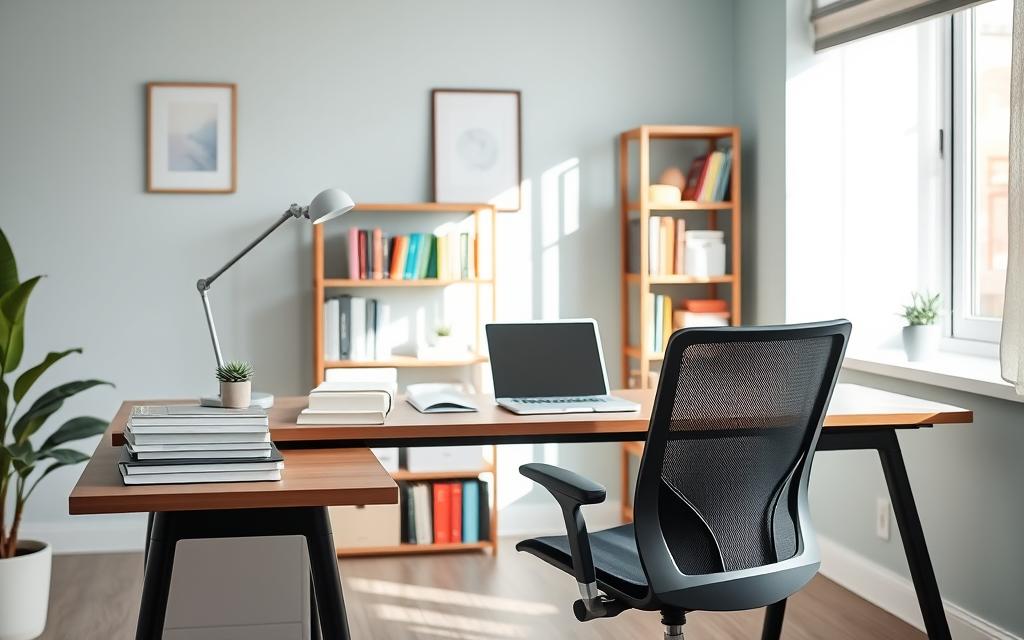

Did you know students who study in organized spaces report up to 20% higher focus and completion rates? This simple edge can be the difference between rushing through assignments and mastering material.
Your study environment matters as much as your study skills. Start by clarifying your goals and typical session lengths. Using the same spot and set times helps your brain get ready to work.
Think practically about flexibility and context. Whether you study at home, in a library, or a café, reduce distractions around you. Decide if you need a dedicated room, quiet corner, or a portable setup.
Manage digital habits before they manage you. Use Do Not Disturb and app blockers like StayFocusd. Ensure you have reliable Wi-Fi and power protection to keep tech working for you.
Finally, arrange basics for comfort and efficiency. Keep notebooks, pens, and chargers within arm’s reach. Position screens to avoid glare and pick lighting and furniture that reduce eye strain.
These study environment tips form the backbone of an effective study space setup.
If you attend a place like the University of Maryland Global Campus, use resources like success coaches, tutoring, and writing centers. These can help you refine your routine and stay on track.
Assess Your Current Study Space
Start by taking a quick audit of your room, desk, and tech. Note what pulls your attention away and what helps you focus.
This first step will help you assess study space and choose study space organization ideas that actually work for you.

Identify Distractions
Make a short log for several study sessions. Write down interruptions like phone alerts, open social tabs, noise, TV, or people passing by.
Track when your mind drifts and what triggers it. Use that log to spot patterns to reduce distractions.
If notifications break your flow, turn your phone to Do Not Disturb mode. If roommates cause noise, find quiet hours at the library or set a study schedule.
These steps let you declutter study space from digital and physical interruptions, helping focus and productivity.
Evaluate Your Needs
List the tasks you do most: reading, problem sets, video lectures, or group work. Note session lengths and the gear you use.
Check outlets, Wi-Fi strength, and where you store supplies. Make sure your layout supports standing or spreading papers if needed.
This review helps you optimize your study area for comfort and function.
Consider Your Learning Style
Think about whether silence helps or gentle background sound improves your focus. Some work best in a quiet library or a home corner.
Others prefer ambient noise from a café or a playlist. If you study best in groups, set up a spot for collaboration without clutter.
If you need visual aids, reserve wall space for a whiteboard or pinned notes. Tailoring your space this way keeps your routine consistent and effective.
Choose the Right Location
Picking where you study shapes how well you focus. You want a study space that supports long sessions and limits interruptions.
Make sure your setup keeps you alert. Think about power access, Wi‑Fi, and seating that lets you sit upright for your work time.
Find a Quiet Area
Choose a study place that shows others you are working. A private corner at home or a reserved spot at the library helps avoid interruptions.
If you like low-level background sound, some cafés can boost creativity. Test several places before choosing one to match your focus style.
Avoid studying in beds, recliners, or busy parks. These spots invite relaxation and often lack outlets or flat surfaces for laptops.
Ensure Adequate Lighting
Good lighting keeps you alert and reduces eye strain. Pick natural light near a window for better mood and focus whenever possible.
Use a desk lamp to avoid screen glare. Too dim light strains eyes; too bright light may cause headaches.
Choose lighting with adjustable levels and color temperature to fit your task. When using public spaces, check lighting, opening hours, outlets, and internet access ahead of time.
Invest in Ergonomic Furniture
Good furniture reduces aches and helps you stay focused. Improving study space ergonomics cuts physical distractions. It also avoids fatigue that breaks concentration.
Small upgrades give big returns in comfort and productivity.
Select a Comfortable Chair
Pick a chair with firm lumbar support to keep your lower back aligned. Set the height so your feet rest flat on the floor. Your knees should form a 90-degree angle.
Aim for an upright posture instead of reclining. Overly soft seats can lower alertness.
Get a Functional Desk
Choose a desk height that allows your elbows to sit at 90 degrees when typing or writing. Ensure there is enough surface area for a laptop, textbooks, and notes.
A sit-stand desk or converter lets you change positions. This reduces long periods of sitting.
Position screens at eye level to avoid neck strain. Use a laptop stand with an external keyboard if needed. Keep cables tidy and use surge protectors to protect your electronics and reduce visual clutter.
Temperatures that are too hot or too cold hurt focus. Dress for study sessions to help your brain shift into work mode. Use these tips to design your study area so comfort boosts productivity instead of dulling it.
Declutter Your Study Area
Start by clearing a small zone and set a timer for ten minutes. You will see how quick wins reduce decision fatigue and help you focus.
A tidy workspace makes it easier to study longer. It also helps you follow study space organization ideas that match your routine.
Use a simple sorting method: keep, store, or remove. This helps remove study clutter without overthinking.
Items you haven’t used this term should be moved to storage or donated. Limit wall displays to current materials and rotate them to reduce visual clutter.
Place frequently used items within arm’s reach. Group pens, calculators, highlighters, and index cards so you grab what you need quickly.
Clear labeling on bins and folders speeds up tasks when organizing study supplies fast. For shared rooms, involve family or roommates in the decisions.
Agree on zones for frequently used, occasionally used, and unused items. Shared choices prevent arguments and keep areas clear. Try portable storage when space is tight.
Rolling carts, backpacks, or caddies keep materials mobile and neat. Portable options support short study sessions in different rooms.
Create short maintenance habits you can stick to. Reset the desk before finishing each day. Return materials to assigned spots.
Run a quick weekly scan to fix clutter issues. Small routines stop clutter from building up again.
| Category | Where to Keep It | Action |
|---|---|---|
| Frequently used | On desk or top shelf within arm’s reach | Keep; label and group by task |
| Occasionally used | Closed bin or lower shelf | Store; rotate to desk when needed |
| Unused this term | Storage box or donation bag | Remove study clutter; donate or archive |
| Portable items | Rolling cart, caddy, or backpack | Organize study supplies for mobility |
| Wall displays | Pinboard or magnetic strip | Rotate current materials only |
Utilize Organizational Tools
Start by picking storage that fits how you like to study. Clear containers help you see your items easily. Labeled bins and consistent colors help you return items quickly and keep your study space organized.
Keep books and supplies you use often within easy reach. Group similar things together on shelves or bins. Store items you use less on high shelves or inside cabinets.
This reduces clutter and keeps your study area tidy. Use desk organizers like trays for papers, pen cups, and charging stations. These tools free up space and prevent distractions.
In bigger rooms, create zones for different tasks. Keep instruction materials in one area, and work materials in another. Hands-on tasks should be in spots that are easy to clean.
In shared spaces, use portable stations to save setup time and make cleanup simpler. For digital tools, keep folders clear and use good file names.
Bookmark important websites and turn on autosave to avoid losing work. Backups protect your notes and lower study stress.
Choose tools that fit your habits, like magazine holders for textbooks or rolling carts for projects. Cable organizers and surge protectors manage cords well.
A whiteboard and noise-cancelling headphones can help you focus and plan better. Try small changes, like swapping trays for drawer organizers or changing labels to icons.
Use these ideas to make your study space feel natural and steady.
Personalize Your Study Space
Make your study area feel like yours while keeping it tidy and focused. A few purposeful touches can boost motivation. Use small, meaningful items that help you work, not distract you.
Add Motivational Decor
Place a calendar or planner where you can see deadlines each day. Goal charts and sticky notes help you keep tasks visible. Rotate artwork or recent work instead of covering every wall.
Keep quotes short and easy to read. A few framed sayings or a corkboard with milestones will boost your focus. These simple elements provide a quick morale lift.
Incorporate Comfort Items
Choose small comforts to support long study sessions. A water bottle, an upright cushion, and a soft throw improve stamina. Use noise-cancelling headphones or a white noise machine to control sound.
Adjust temperature and lighting so you stay alert. Add a plant for fresh air and a mood boost. Avoid devices that invite distraction, like game consoles or a TV remote.
Practical Routines and Systems
Create a pre-study ritual to signal your brain it is time to focus. Change into study clothes or spend five minutes planning. Consistent start times build good habits.
Customize storage and labels to match how you work. Tailor shelves, bins, and digital folders for quick access. If you study with peers, add a collaborative corner with a shared whiteboard.
| Element | What to Add | Benefit |
|---|---|---|
| Motivational decor | Calendar, goal chart, rotating artwork | Keeps deadlines visible and boosts drive |
| Comfort items | Water bottle, supportive cushion, plant | Enhances focus and physical comfort |
| Sound control | Noise-cancelling headphones, white noise | Reduces distraction from background noise |
| Routines | Pre-study ritual, consistent start times | Signals focus and builds productive habit |
| Organization systems | Custom labeling, shelves, shared whiteboard | Makes materials easy to find and sustain routine |
Maintain Your Study Environment
Keeping your study area organized is a small habit that brings big rewards. Set a daily reset: clear notebooks, put pens back, and close tabs. Do a quick weekly scan to spot any problems.
Schedule seasonal deep cleans to stop clutter from building up over time.
Regularly Clean and Reorganize
Reset routines help you clean your study area regularly without spending hours. Every few weeks, inspect and sort your materials carefully. Move rarely used supplies into labeled boxes and keep only current textbooks nearby.
Research shows an organized space helps you focus better and switch tasks more smoothly.
Update Your Setup as Needed
As your workload changes, update your study setup to meet new needs. Check ergonomics—chair height, monitor position, and lighting. Consider a sit‑stand option if you study for long sessions.
Maintain your tech by checking Wi‑Fi, backing up autosave settings, and tidying cables to avoid interruptions. Use calendars to block study times and tell roommates or family when you need focus hours.
Small, steady actions to keep your study space neat lessen mental stress and help you stay focused. This way, you spend more time learning and less time searching for supplies.