


75% of students who use a daily study planner template report improved focus and better grades within a month.
This simple change can reshape your study routine and boost your success.
You need a planner that fits your life, not the other way around.
Whether you like a printable planner from Day Designer, a PDF for GoodNotes, or a Notion template, the right layout helps.
It lets you see priorities, block time, and reduce stress.
Start with a printable daily planner for students or a digital template you can adjust.
Use hourly blocks for classes, a short to-do list for top tasks, and a spot for notes.
Small, consistent steps make studying predictable and productive.
What is a Daily Study Planner Template?
Using a daily study planner template helps you turn vague intentions into clear actions.
A good planner gives structure for each day, so you can block time, list priorities, and track progress.
This way, you won’t have to guess what to do next.
Definition and Purpose
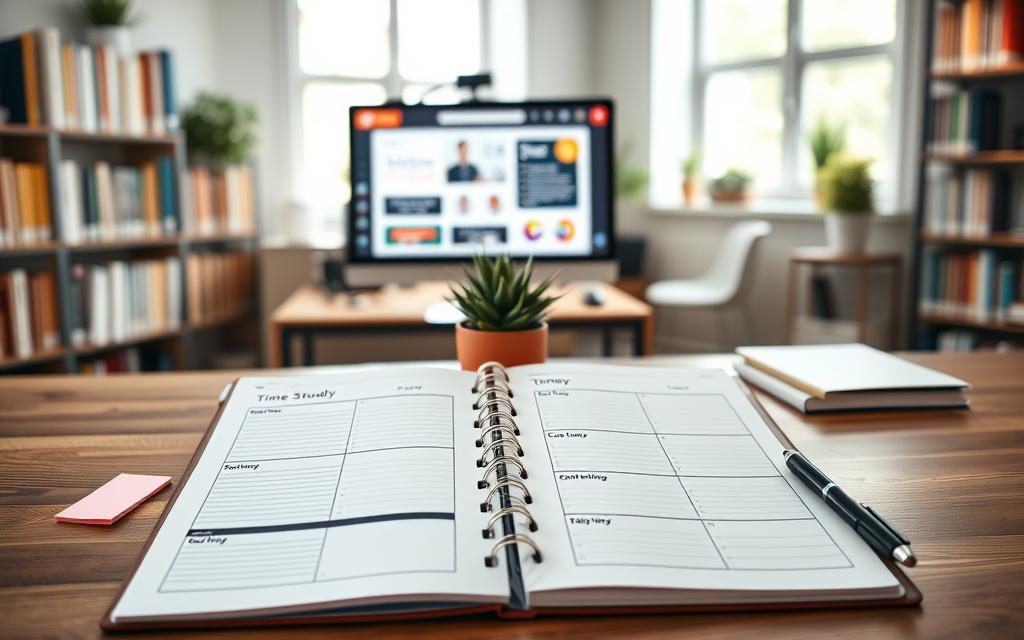
A study schedule template is a formatted page where you plan study sessions, deadlines, and breaks.
It can be printable pages kept on your desk or a digital layout in Notion or Google Sheets.
You can use it as a focused plan for a day or combine it with weekly and monthly views for longer goals.
A student planner template usually includes time blocks, task lists, and short reflection prompts.
This mix keeps work organized and saves mental energy for learning.
Use undated templates for flexible routines or dated ones to track progress over a semester.
Benefits of Using a Daily Study Planner
Clarity is the first benefit. Mapping tasks into a study schedule shows your day at a glance.
This clarity helps cut decision fatigue and reduces procrastination.
Next, time management improves. A daily study planner helps you allocate study sessions and breaks to keep focus without burnout.
Finally, a daily planner supports goal setting and review. You can mark priorities, note deadlines, and reflect on what worked.
Building this habit creates better routines and steady progress.
| Feature | Printable Option | Digital Option |
|---|---|---|
| Layout | Time-block columns, priority boxes, task checklists | Modular pages, linked calendars, searchable notes |
| Flexibility | Undated pages to reduce pressure | Easy edits, templates for repeating weeks |
| Tracking | Daily and weekly review spaces | Progress bars, tags, reminders |
| Best use | Desk-based study sessions and quick planning | Project hubs, deadlines, and resource storage |
Key Features of an Effective Study Planner
An effective study planner keeps your day clear and your goals within reach. Look for layouts that reduce clutter and match your workflow. Tools that let you tweak details help suit your routine.
The right mix of print-ready formats and digital views makes a planner work for every student.
User-Friendly Design
Choose a study planner printable with simple blocks for time, priorities, and quick checklists. Clear labels and bold headings help you scan the page fast. Offering A4, A5, and Letter sizes ensures the layout fits both binders and backpacks.
An intuitive design lowers resistance to use. If you prefer digital options, a study planner PDF that converts to mobile and desktop views keeps things handy. Small visual cues, like shaded priority areas, make your daily plan easier to follow.
Time Management Options
Time blocking is essential. Pick a study timetable template that supports hourly slots and two-page weekly spreads. A weekly-at-a-glance view helps you plan review blocks without overbooking your day.
Digital tools such as Notion let you switch between calendar, board, and timeline views. This flexibility turns the same plan into a list, kanban board, or timeline depending on your style.
Customization Capabilities
Top planners let you choose start day, page size, and whether pages are dated or undated. An editable study planner template should allow color choices and rearrangeable sections for goals, reminders, and priorities.
Customization also means printable and digital parity. A study planner PDF that matches an editable template makes it easy to print a physical copy or keep a digital master you update weekly.
| Feature | Why it Helps You | Best Format |
|---|---|---|
| Clear time blocks | Prevents overbooking and boosts focus | study timetable template (hourly) |
| Priority sections | Highlights must-do tasks for the day | study planner printable (A4/A5/Letter) |
| Multiple views | Adapts to lists, boards, or timelines | editable study planner template (Notion, PDF) |
| Dated vs. undated pages | Offers flexible or fixed scheduling | study planner PDF with both options |
| Color and layout choices | Improves readability and personal fit | editable study planner template |
How to Create Your Own Daily Study Planner
Start simple and pick a format that fits your routine. You can use a printable binder, a digital app like Notion, or a hybrid setup. A daily study planner that matches your habits makes it easier to stick with a plan.
Choose the Right Format
Decide between dated and undated layouts. Dated pages give a timeline for exams. Undated pages let you skip days without waste.
Consider hourly grids if you block study sessions. Use a simple list if you prefer flexible sessions.
Try a study planner printable if you like pen and paper. Choose an editable template to tweak fields and reuse the layout. Notion and Google Sheets offer blocks to build a custom workflow that links tasks, notes, and resources.
Identify Your Study Goals
Write clear, measurable goals like exam prep, project milestones, or skill practice. Break large goals into weekly targets and daily tasks. This changes vague intentions into a schedule that shows progress.
Use goal trackers on weekly pages and short review prompts daily. These checks help you see trends, such as which subjects need more time or which methods improve memory.
Layout Your Daily Schedule
Map each day into focused blocks and short breaks. Start with your highest-priority task in the morning when focus is best. Add a priority list and a review section to record wins and changes.
Create a table to show a sample daily layout you can copy. Adjust times, subjects, and break lengths to match your energy and deadlines.
| Time | Task | Priority | Notes |
|---|---|---|---|
| 8:00–9:30 AM | Chapter review — Biology | High | Active recall, 20 min quiz |
| 9:30–10:00 AM | Break | Low | Walk, hydrate |
| 10:00–11:00 AM | Problem set — Calculus | High | Focus on weak areas |
| 11:00–12:00 PM | Notes consolidation | Medium | Make flashcards |
| 2:00–3:00 PM | Project work — History | Medium | Outline key sources |
| 8:00–8:30 PM | Daily review | High | Mark wins and plan tomorrow |
Save different versions of your plan. Keep a schedule template for routine days and an editable planner for exam weeks. Print key pages for a study planner you can carry or pin.
Tips for Using a Daily Study Planner
Use simple systems that fit your life. A daily study planner helps turn vague intentions into clear steps.
Start small, track your progress, and make changes after brief weekly reviews.
Set realistic goals
Begin each week with a goal-setting worksheet or a quick goal page from a study planner PDF. Pick one to three measurable targets for the week.
Use habit trackers and monthly reviews to check your progress. Printable “Quick Fixes for When You Feel Overwhelmed” help you adjust instantly.
Prioritize tasks
Arrange tasks by due date and importance. Notion’s workflow ideas suggest starting with core templates like a weekly status view.
Use a backlog for lower-priority items and a sprint-style board for urgent projects. Your daily study schedule should highlight top priorities clearly.
Review and adjust
Block hourly slots in your planner so tasks are scheduled, not just hoped for. Practical planner pages recommend undated sheets if you skip days often.
Do a short weekly review to move unfinished work, reschedule study blocks, and refine your planner. This reduces procrastination and keeps your routine realistic.
| Tip | Action | Tool or Format |
|---|---|---|
| Set measurable goals | Choose 1–3 weekly targets and log them | Goal-setting worksheet or study planner PDF |
| Prioritize by impact | Rank tasks by due date and importance | Daily study schedule template, Notion board |
| Schedule hourly blocks | Assign specific times to study tasks | Student planner template with hourly layout |
| Use undated pages | Skip without wasting space | Printable planner pages or study planner PDF |
| Weekly review | Adjust goals and move tasks as needed | Weekly review page or habit tracker |
Digital vs. Paper Study Planners
You have choices when you plan your study time. Pick a method that fits your habits, tech comfort, and goals.
Below you will find clear benefits for digital tools, the strengths of paper planners, and hybrid options that mix both approaches.
Benefits of Digital Planners
Digital planners let you sync schedules across devices. Apps like Notion, Google Calendar, and GoodNotes link tasks, notes, and timelines.
This helps you track complex projects without losing context. You can use a study planner PDF or an editable template on tablets.
These tools offer handwriting with cloud backups. Automation speeds up repeated tasks and reminders, saving time for review and practice.
Advantages of Paper Planners
Paper planners reduce screen time and distractions during focus blocks. A study planner printable gives tactile control—you print only pages needed.
You can rearrange spreads as priorities change. Pen-and-paper layouts improve memory and allow quick sketching of ideas.
Simple daily study planner template pages suit short study bursts and students who prefer a visible, physical schedule on their desk.
Hybrid Options
Hybrid planning blends the best of both digital and paper methods. Use an editable study planner template or digital tracker for deadlines and backups.
Print select pages for daily checklists and habit logs. Many students use a study planner PDF for long-term plans.
They also keep a study planner printable for daily rituals. This mix makes your workflow flexible and guards against tech failures.
| Aspect | Digital Planner | Paper Planner | Hybrid |
|---|---|---|---|
| Portability | High across devices | Easy to carry but single copy | Digital sync + select printed pages |
| Customization | Editable study planner template options, templates and plugins | Flexible layouts with a study planner printable | Custom PDFs for tablets and printable inserts |
| Distraction Risk | Higher without discipline | Low; focused by design | Managed by clear rules for use |
| Backup & Search | Automatic backups and fast search | Manual copies needed | Digital backup of printed pages via scans or study planner PDF |
| Best Use Case | Complex schedules and collaborative work | Daily focus, note-taking, memory tasks | Students who want tech efficiency and tactile practice |
Essential Sections to Include
When you build your study system, add a few core parts. These parts keep your day clear and focused. A good layout helps you spot conflicts and manage time without stress.
Daily Schedule
Your daily schedule should split the day into focused blocks. These blocks are for classes, study sessions, and breaks.
Time-blocking reduces decision fatigue and makes it easier to follow through. A daily study schedule template works well for exams or heavy coursework.
Include a short “week at a glance” line to check for overlapping commitments. That small view makes it simpler to balance deadlines, classes, and personal time.
Task List
Create a task list with priority markers. This helps you finish high-impact work first.
Use categories like reading, assignments, and revision. These help filter tasks by course or due date.
If you like printable formats, a study planner printable gives you checkboxes and priority tags to cross off. That physical action helps keep momentum.
Notes and Reminders
Reserve space for quick notes, reminders, and habit tracking.
Jot questions for office hours or note tricky problems to save time later. Habit trackers help monitor study streaks and sleep patterns.
Combine short daily reviews with reminders for tests. This reduces last-minute panic and keeps your goals visible.
| Section | Purpose | Example Elements |
|---|---|---|
| Daily Schedule | Organize time and avoid conflicts | Time blocks, start/end times, week-at-a-glance |
| Task List | Prioritize work and track progress | Priority tags, due dates, course filters |
| Notes and Reminders | Capture ideas and keep deadlines visible | Quick notes, habit tracker, exam reminders |
| Review Area | Reflect on wins and adjust plans | Daily review prompt, next-step checklist, lessons learned |
| Resources | Link study materials and references | Reading list, lecture links, textbook pages |
Popular Tools and Apps for Study Planning
Pick tools that fit your workflow. Using a mix of printable pages and apps gives you more flexibility.
You can print a study planner PDF for focused review sessions. Meanwhile, apps help track live tasks.
Here are three practical options you can use. Each has a clear role in a balanced system.
Use an editable study planner template for quick changes. Keep a daily study planner template for routine check-ins.
Use a study schedule template to map out long-term deadlines clearly.
Notion
Notion works well when you need one workspace for notes, tasks, and timelines.
You can build databases for courses, link reading lists to assignments, and create Kanban boards for project stages.
Start from templates like project plan, timeline, or weekly status. These help cover scope, schedule, ownership, and communication.
Export pages as PDF to pair with printable planners for easy access.
Todoist
Todoist is great for managing daily tasks efficiently. Use priority labels to organize urgent work.
Set recurring tasks for study routines. Add reminders so you don’t miss due dates.
Todoist pairs well with an editable study planner template. Use the app for quick task capture and your template for polished, printable records.
Syncing helps keep your daily planner aligned with live tasks and changes.
Trello
Trello uses visual boards to track progress clearly. Create lists like To Do, In Progress, Review, and Done.
Cards can contain checklists, attachments, and due dates for better organization.
Trello suits group projects and staged assignments. Combine it with a study schedule template to plan milestones effectively.
Export important cards or print board views as PDFs for offline review and reference.
- Printable resources complement digital apps. Day Designer-style pages can be printed from PDF and organized along with digital task managers for a unified system.
- Digital planner marketplaces offer ready-made PDF planners that work with GoodNotes and Notability.
- Combine tools to match your flow: Notion for notes, Todoist for daily tasks, Trello for group projects.
Real-Life Examples of Study Planners
Real examples show how planning tools help students in daily life. You will read short testimonials and practical advice from educators. You can also find online resources to use right away.
This mix shows how a printable daily planner for students fits different routines.
Student Testimonials
Students at the University of Michigan and Arizona State University report better focus using time-blocked daily pages. They say priority sections, habit trackers, and weekly reviews help the most.
One student says a study planner printable helped break long study sessions into short, manageable tasks. Another found that a student planner template with a priority list reduced procrastination and improved exam prep.
Educator Recommendations
Teachers often suggest digital systems like paper layouts. Many high school and college instructors favor Notion templates for project plans and weekly overviews. These templates support classroom workflows and help manage assignment timelines.
An instructor might pair a study planner PDF with a Notion project board. This offers a printable planner and a flexible digital backup for group work or research projects.
Online Resources
Marketplaces and educational sites offer downloadable weekly and daily planner PDFs. These are undated, customizable, and fit both print and digital needs.
Look for study planner printable packs with goal sections, reminders, and to-do lists. Use a study planner PDF for a quick, consistent layout to print or annotate on a tablet.
How to Stay Motivated with Your Planner
Keeping momentum with your studies often comes down to small, repeatable habits. Use tools that show progress at a glance so you can celebrate wins. This mix of printable trackers and digital dashboards makes it easy to notice growth.
It also helps you adjust plans when needed.
Celebrate small achievements
Track tiny wins with a printable goal tracker or habit tracker. Mark a completed study block or finished chapter for quick feedback.
Day Designer worksheets like the Monthly Goal Tracker pair well with a study planner printable or PDF to record milestones.
Create a study routine
Build a routine using weekly-at-a-glance and hourly templates. A daily study schedule template helps you slot focused blocks and breaks.
Notion templates like weekly review and sprint boards let you improve your routine. They also keep a progress database that shows momentum.
Join study groups
Accountability from peers helps you stay consistent. Join shared Notion pages or Trello boards to swap tips and post accomplishments.
Use a daily study planner template or printable that group members can reference. This way, everyone stays synced and motivated.
Final Thoughts: Start Your Journey Today
Begin by downloading a study planner printable or a student success planner printable. Give it a test run. Try pages in a binder or as single sheets.
Mix daily, weekly, and goal pages. Reprint what works best for you. If you like digital tools, grab a study planner PDF for GoodNotes or Notability.
Experiment with dated and undated layouts. See which version helps you stay on track the most.
Take Action Now
Start small: pick one daily study planner template. Use it for a week. Combine an hourly study timetable with a simple task list.
Use Notion templates like project plan, timeline, and weekly views. Build a flexible system and link resources as you go.
Continuous Improvement Tips
Review your planner weekly and make adjustments. Swap pages between printable and digital formats as needed. Reprint sections that require changes.
Update your study planner PDF or editable template when priorities shift. Celebrate small wins. Remove what doesn’t help your focus.
Find What Works for You
Personalize your approach. Some students prefer a study planner printable in a binder. Others like a digital study timetable template in Notion.
Keep iterating until your routine matches your life. Let your daily study planner grow with your goals and study habits.
This helps keep your progress steady and sustainable.