


85% of students who try a single, small habit for two weeks report sticking with it longer than a dramatic change.
A simple change can reshape your study life quickly.
If you have no plan, a study routine is a repeatable sequence of study behaviors.
This includes time blocks, simple habits, and short rituals that boost focus and memory.
Think of it as a basic blueprint you follow until stronger habits take over.
A beginner study schedule is different from advanced plans.
Instead of rigid timetables or intense productivity systems, it uses simplicity, short sessions, and flexibility.
This helps you keep going, lowers cognitive load, and helps you learn without feeling overwhelmed.
This article guides you to build a study routine step by step.
You’ll learn how to find your learning style, set realistic goals, and design a flexible plan.
It also covers beating common obstacles, like procrastination.
Start now with three actions: choose one subject for two weeks, pick three study times per week, and set up a basic study space.
Include phone on Do Not Disturb, a water bottle, and a notebook.
These small steps begin building your study routine.
Research from Duke University and University College London shows repeated small routines form lasting habits.
Cognitive load theory supports starting simple to improve learning efficiency.
Treat the first month as an experiment: track time studied, topics done, and your self-rated focus, then adjust as needed.
Expect steady improvement rather than overnight mastery.
Common pitfalls are having no plan, irregular sessions, and poor sleep; avoid them and be patient.
With a friendly, practical approach, you can create a beginner study schedule that grows into reliable progress.
Understanding the Importance of a Study Routine
Starting a study habit without a plan can feel chaotic. You gain control by building a routine that fits your life. This guide explains why a routine matters and how it helps you learn with less stress.
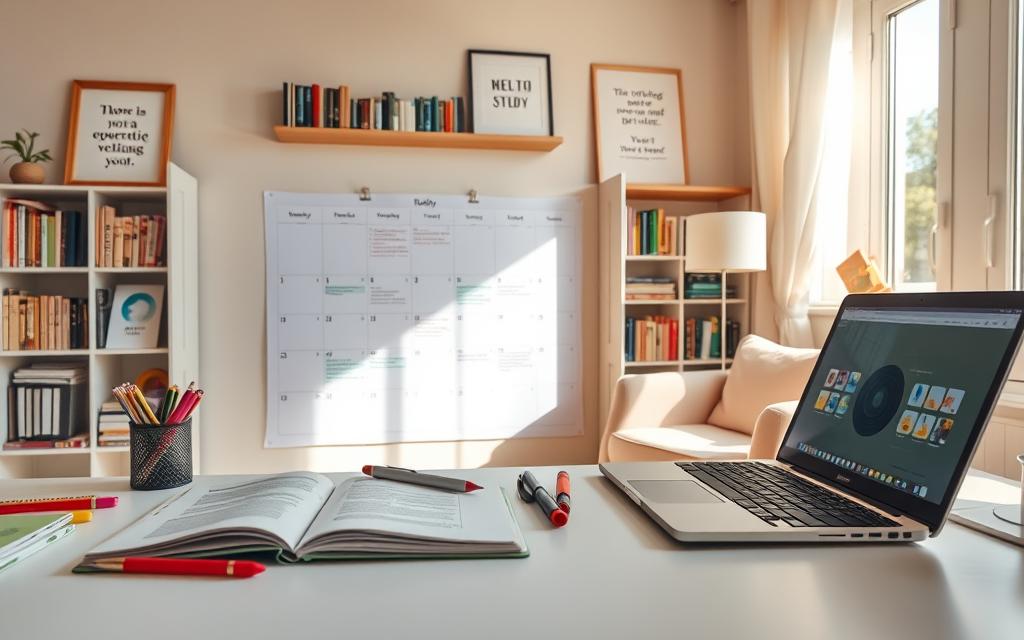
Why Having a Study Routine Matters
Regular practice improves memory through the spacing effect shown by Hermann Ebbinghaus and modern research. Planning short, repeated sessions locks knowledge into long-term memory.
Routines cut down on decision fatigue. Choosing when and how you study ahead saves mental energy for focused work. Columbia University shows fewer choices help maintain attention.
Students with consistent schedules report better grades and lower stress, says the American Psychological Association and EDUCAUSE. Predictable study blocks reduce last-minute panic.
Routines also bring social and emotional benefits. Knowing your study times helps balance school, work, and friendships. This predictability lowers anxiety and supports commitments.
Benefits of Being Organized
Good organization improves time management. A clear plan helps prioritize tasks and prevents cramming, which harms performance compared to spaced practice.
You use resources more efficiently when materials are ready. Keep textbooks, notes, and apps like Anki or Quizlet prepared for productive sessions. This supports effective habits for beginners and beyond.
Tracking progress boosts motivation. Setting milestones and marking improvements lets small wins push you forward.
Practical steps are simple and beginner-friendly. Use Google Calendar or a Moleskine planner for scheduling blocks. Review weekly to adjust priorities. Keep a short to-do list daily for momentum.
Example for starters: do three 45-minute sessions weekly. Use one notebook for concise summaries. After each session, spend 10 minutes reviewing key points. These tips make study manageable and repeatable.
| Area | Beginner Plan | Why it Helps |
|---|---|---|
| Session Length | 3 × 45 minutes per week | Limits fatigue, matches attention span, supports spaced repetition |
| Materials | One notebook + flashcards (Anki/Quizlet) | Reduces search time, keeps notes concise, aids active recall |
| Review | 10-minute recap after each session | Boosts retention through immediate consolidation |
| Planning | Weekly 20-minute review on Sunday | Adjusts priorities, prevents overload, improves time use |
| Tracking | Simple milestones (read chapter, complete problem set) | Shows progress, increases motivation, informs next steps |
Identifying Your Learning Style
Before creating a study schedule, learn how you best absorb information. Tailoring your study plan makes it more effective. Most people benefit from mixed methods, so use learning styles as guides, not strict labels.
Visual, Auditory, and Kinesthetic Learning
Visual learners pick up ideas from charts, diagrams, and color-coded notes. Use mind maps, annotated diagrams, and slides to turn facts into images. Place concept maps in morning focus blocks to boost memory.
Auditory learners remember by listening and speaking. Record lectures with permission or read notes aloud. Explain ideas to a study partner using the Feynman Technique. Keep voice memos or podcasts for review during commutes.
Kinesthetic learners need movement and hands-on practice. Solve problems by hand, use flashcards, build models, or role-play processes. Short active sessions help lock in concepts better than long, passive reading.
How to Discover Your Learning Style
Try short experiments over two weeks. Use a visual approach one week, auditory methods the next, and kinesthetic the following week. After each session, rate focus and recall to find what helps you most.
Use trusted tools like the VARK questionnaire for a first look. Treat results as guidance. Track quiz scores, time to solve problems, and recall speed to observe outcomes.
For beginner study ideas, mix methods in one session. Start with a quick visual summary, then a five-minute audio recap, and end with a hands-on problem. Log what works in a planner to improve your study schedule.
Useful tools include Notion and Evernote for notes, smartphone voice memos for audio, and platforms like Khan Academy for practice. For a step-by-step guide, visit this resource.
| Learning Style | Top Techniques | Best Time to Practice |
|---|---|---|
| Visual | Mind maps, color notes, infographics | Morning focus blocks |
| Auditory | Lecture recordings, reading aloud, study groups | Afternoon review sessions |
| Kinesthetic | Practice problems, flashcards, labs | High-energy periods, short bursts |
Setting Realistic Study Goals
Start by turning big ambitions into small, clear actions. If your goal is to do well in a course, break it into daily, weekly, and semester tasks. This focused approach builds effective study habits and stops you from feeling overwhelmed.
Creating Achievable Goals
Choose short-term goals you can finish in one session. For example, review lecture notes for 30 minutes or summarize one chapter section. Weekly goals might include finishing and summarizing a whole textbook chapter.
Monthly goals can be a self-test that reveals weak areas. Use simple progress trackers like a study log, Trello board, or a checklist in Todoist to mark tasks done. Track results weekly so you can adjust upcoming sessions.
Aim for consistency with 20–60 minute sessions instead of rare, long marathons. Avoid vague tasks like “study chemistry.” Replace them with specific steps like “read and summarize Chapter 3” or “complete ten practice equations.”
These concrete tasks form a reliable study plan base for beginners. They support steady progress over time.
The SMART Goal Framework
Apply SMART to every study task: make it Specific, Measurable, Achievable, Relevant, and Time-bound. Specific means writing “read and summarize Chapter 3” instead of just “study.” Measurable means saying “complete 20 practice problems” rather than “do problems.”
Keep goals achievable by matching them to your workload and energy. Ensure relevance by linking tasks to upcoming exams. Add clear deadlines like “by Friday evening” or “three sessions this week.”
Examples you can use immediately:
- By Sunday, complete and self-grade two algebra quizzes and aim for at least 70% on each.
- This month, memorize 50 Spanish words using spaced repetition, reviewing 10 per week.
If you miss goals repeatedly, shrink the scope or add time. If goals feel easy, increase the challenge a bit. Use Google Sheets to log scores, Habitica to build routines, or a printed checklist for quick wins.
Follow a simple five-step planning framework: map availability for 30 minutes, estimate study hours using the 3-hours-per-credit rule and double for buffer, block study times of 30–120 minutes, assign specific tasks to each block, and protect sleep and breaks to keep momentum. These steps mix structure with flexibility to build effective study habits over time.
For a clear starter template and more study routine tips for beginners, visit how to organize studies for beginners.
Creating a Flexible Study Schedule
Start with a simple framework that fits your life. Building a flexible plan makes creating a study schedule less scary.
Use short, clear blocks that match your energy and commitments. They help form a dependable beginner study schedule.
Use routines that let you adapt. Small adjustments keep momentum without causing burnout.
Below are practical steps to help you turn beginner study routine ideas into a real plan.
Tips for Allocating Study Time
Try the Pomodoro Technique for focused sessions: 25 minutes of work plus a 5-minute break.
After three or four cycles, take a longer break. If 25/5 feels short, switch to 45/15 to match your attention span.
Block time weekly. Aim for three 45-minute sessions per subject each week and increase that as stamina grows.
Put hardest tasks in your peak focus time — morning, afternoon, or night — based on when you concentrate best.
Prioritize with an Eisenhower Matrix or a simple ABC system. Mark tasks A (high), B (medium), or C (low) and tackle A items first.
Plan active learning: practice tests, problem-solving, and teaching concepts aloud beat passive rereading.
Use tools to build and track your plan. Google Calendar helps with time blocking. Toggl tracks session length.
A physical planner gives tactile reinforcement and keeps your beginner study schedule visible.
Balancing Study with Other Activities
Place fixed commitments first: classes, work, and family obligations.
Fit study blocks around them while keeping sleep at 7–9 hours and including exercise. This balance prevents burnout and boosts productivity.
Schedule rest days and social time. Add a weekly review session to reassess workload and tweak your plan.
Set boundaries with roommates or family during study blocks so your time stays protected.
Use commute and short gaps for passive review. Listen to audio notes or review flashcards.
Batch similar tasks to save setup time. Link study to daily habits like after breakfast or during lunch to build consistency.
| Lifestyle | Sample Weekly Plan | Focus Tips |
|---|---|---|
| Full-time student | Morning lectures, afternoon 2×45-min study blocks, evening 30-min review | Reserve mornings for new material; review in the evening |
| Working adult | Two 45-min sessions on weekday evenings, one 2-hour weekend session | Use weekdays for drills, weekend for deep work |
| Part-time student with family | Short 20–30 min morning bursts, 3-hour consolidated weekend block | Protect weekend block for uninterrupted focus |
Keep your plan flexible. Review progress weekly and adjust session lengths or timing as needed.
These beginner study routine ideas help you stay consistent without rigid rules.
Staying Motivated and Overcoming Challenges
Keeping momentum when you start a study routine without a plan can feel hard. Small systems make a big difference. Post weekly goals where you see them.
Use a digital widget or a simple planner. Celebrate small wins so your progress stays visible. Track streaks, chapters finished, or quiz scores to build confidence.
Make effective study habits feel rewarding.
Strategies to Stay Engaged
Use micro-rewards like a 10-minute walk, a favorite song, or a snack after focused sessions. Vary your methods—read, do practice problems, use flashcards, then teach the concept aloud.
This cuts boredom and deepens retention. Try apps like Forest, Habitica, or Anki to gamify practice. Join study groups or forums, such as Reddit r/GetStudying, for accountability and fresh ideas.
Tips for Dealing with Procrastination
Start by identifying your triggers: is the task unclear, boring, or scary? Break big tasks into tiny steps. Use plans like “If it’s 7 p.m., then I will study for 30 minutes.”
Commit to a five-minute starter; momentum usually follows. Use commitment devices—shared calendars, Cold Turkey, or Freedom—to remove easy distractions. Reframe missed sessions as data, not failure.
Note why you skipped and adjust your routine. If procrastination feels chronic or tied to stress, ADHD, or depression, consider counseling or accommodations. Try a 30-day trial: pick one subject and apply these tips. Log your sessions, and refine your approach to build lasting, effective study habits.